We started with a problem that cost us a customer.
A few years ago, an Indonesian customer took a batch of our 60V packs for electric motorcycles running ride-hail and food delivery. Three months later they sent us a video: a bike broken down at the roadside, the rider opening the seat, the pack too hot to handle. Range had dropped from 60 km to just over 40.
Our first step was to check the cell batch. We pulled every test curve from that production run and spent two days on it. Nothing wrong.
So we sent someone out and followed the bikes for two days. That is when we understood the issue.
It was not the battery. The battery had not been built for that environment.
Our standard product was designed for battery compartments ventilated for a temperate Chinese spring. In Ho Chi Minh City, direct sun pushes compartment temperature well above 60°C. Riders there typically eat lunch and plug in for a fast charge while the pack is still hot. Hot pack, then more heat. After a year, losing 10 percent or more of capacity is normal. After two years, swelling is not unusual.
A standard Chinese pack in the tropics will not survive long. The conditions are simply outside its design range.
Most of the causes are mundane. That is exactly why they are expensive.
Most of the above was learned through costly mistakes.
Earlier in our business we took shortcuts. We shipped a universal-fit product and let the customer modify the frame and add their own fittings. We did not grade batches tightly enough, and within six months the complaints came in. In the worst case, a customer was challenged locally over stated capacity, returned the entire batch to us for rework, and we absorbed both the cost and the reputational damage.
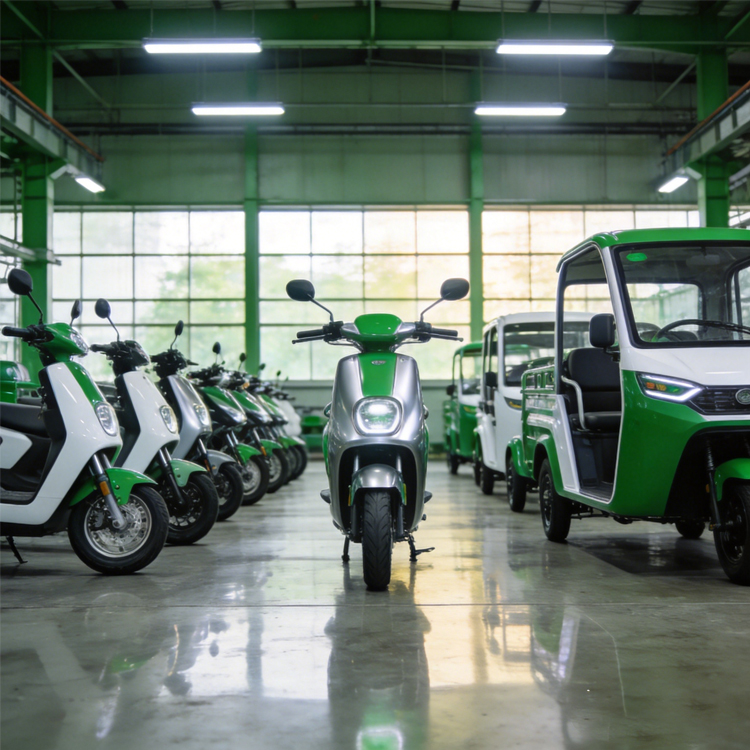
After that, we set one rule in the factory: no pack leaves as good enough. If the dimensions do not fit, we build the tooling. If the duty cycle is unusual, we rewrite the specification. 48V, 60V and 72V. Two-wheel, three-wheel and low-speed cargo. Non-standard compartment shapes and terminal types are all built to the vehicle. We do not avoid the extra work, because a rider stranded at the roadside reflects on every battery supplied from China.
Vietnam recorded more than 400,000 electric motorcycle sales last year, close to five times the previous year. Indonesia and Thailand continue to adjust subsidy policy, but the direction is consistent. The Gulf region runs above 40°C for much of the year, commercial courier services and electric tricycles are scaling rapidly, and compact high-temperature cells are in firm demand.
One point is worth particular attention. In Africa and Latin America, the dominant electric motorcycle model is battery swapping and battery-as-a-service, with the bike and battery separated and offered on a lease basis. Battery lifespan therefore determines the payback period directly. A two-year lease against an eighteen-month battery life leaves several months of unrecoverable cost.
1. Operating conditions. Tell us whether the route is plains or hills, passengers or cargo, how many trips per day, the local peak temperature, and whether submersion is possible. With that information we will provide a specification.
2. Samples are charged at cost. Tooling, cell allocation and test time are all real costs, so we do not offer free samples. It is a statement that does not hold up, and the cost is recovered elsewhere regardless. We quote the sample at actual cost. Once the specification is agreed, we build the sample and run it for three months. Test data is split between us, and if the results hold, we then discuss volume pricing. The sample cost can be offset against the production order, but we do not present samples as free.
3. Documentation. UN38.3, MSDS and dangerous goods sea freight documents are provided. Access requirements have tightened across markets. Vietnam's new standard becomes mandatory from October 2026 and covers salt immersion, drop testing, short circuit and verified capacity. None of these figures can be overstated. If a shipment is delayed at customs, it reflects on us as well.
Our workshop operates in Shandong. Visits are welcome at any time, and if the specification is not correct we will revise it.

Copyright © 2026 Shandong Shanglai Import and Export Co., Ltd. All Rights Reserved.